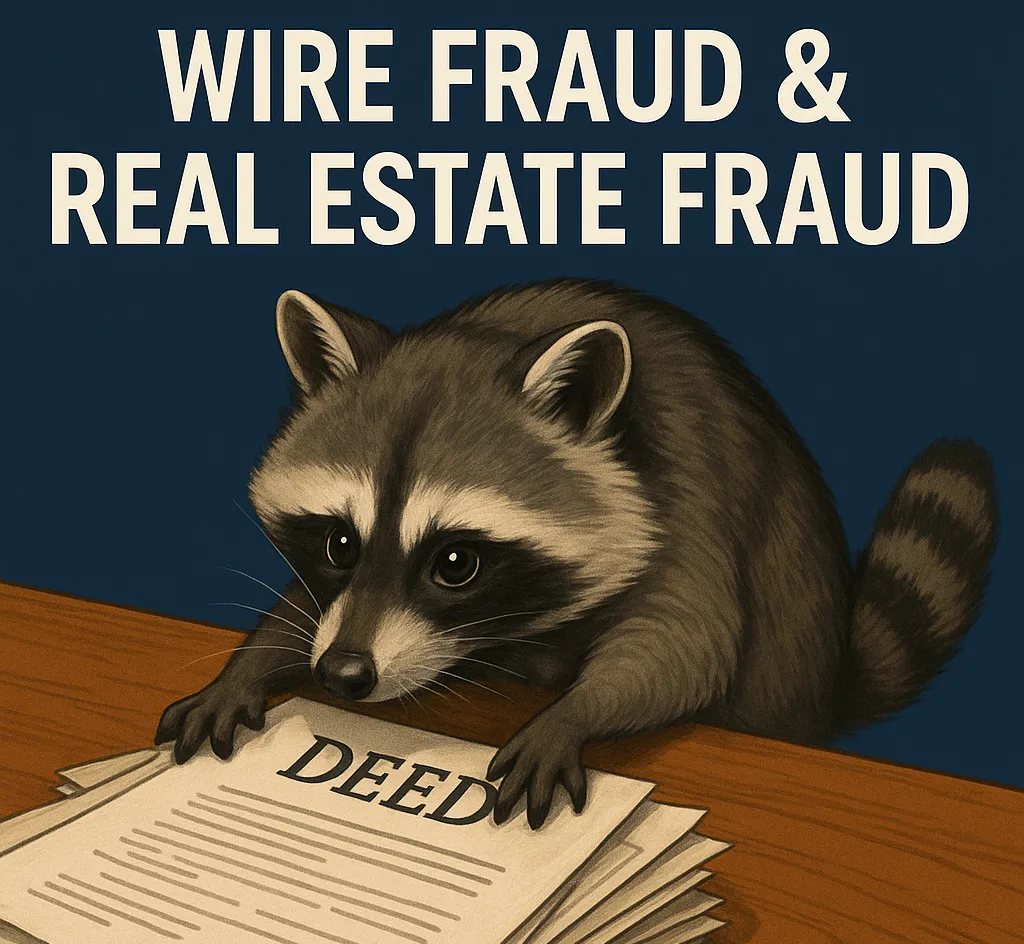
Real Estate Fraud in 2025: What Buyers & Sellers Must Know

Real Estate Fraud Is Rising Fast – Here’s What Every Buyer & Seller Needs to Know in 2024
Real estate fraud is climbing fast — and scammers are getting more sophisticated every year. Whether you're buying your first home or selling land you've owned for decades, it pays to know what you're up against before you're in the middle of a transaction.
🔍The Two Biggest Scams Right Now
Wire Fraud
Wire fraud remains the most financially devastating scam in real estate. It happens when criminals hack or spoof email accounts and trick buyers into sending closing funds or down payments to a fraudulent bank account — usually by impersonating a title agent or attorney right before closing.
The FBI's most recent Internet Crime Report logged $275.1 million in real estate fraud losses in 2025, across more than 12,000 complaints — up sharply from roughly $173 million the year before.
First-time homebuyers are three times more likely to fall victim than experienced buyers, according to CertifID's 2025 State of Wire Fraud Report.
About half of buyers go into a transaction unaware that wire fraud is even a risk.
When fraud does happen, the FBI's Recovery Asset Team only manages to freeze funds in roughly 6 out of 10 cases — meaning a real chance the money is gone for good.
👉 Read NAR's consumer guide on wire fraud
Title & Deed Fraud
Vacant landowners and absentee sellers are increasingly being impersonated in fraudulent title transfers — criminals forge IDs, pose as the property owner, and list or sell real estate they don't actually own.
NAR's 2025 Deed & Title Fraud Survey found that 63% of REALTOR® association leaders have seen title or deed fraud in their market within the past year.
Vacant land is the prime target — 62% of cases involved vacant land, while only 12% involved owner-occupied homes.
The Northeast sees the highest rates, but no region is immune.
👉 See the full NAR Deed & Title Fraud Survey
😬 Buyer & Seller Beware
Roughly 1 in 4 consumers report receiving a fraudulent message at some point during a real estate transaction.
A meaningful share of scam attempts impersonate real estate agents directly.
Nearly 80% of consumers say they'd choose an agent who actively demonstrates strong fraud-prevention practices — and many would even pay more for that peace of mind.
👉 More on how consumers are targeted
✅ What You Can Do Right Now
Always verify wire instructions by phone — call the title company or attorney using a number you already trust, never one pulled from an email.
Work with professionals who actually talk to you about fraud risk. If no one's brought it up, ask.
Sign up for property fraud alerts if your county offers them — this is one of the simplest ways to catch a fraudulent filing early.
Double-check seller identity on any vacant lot or inherited land deal — that's where fraud is concentrated.
🤝 Final Thoughts
The scammers aren't going away — but neither am I. As your Little Rock REALTOR®, protecting my clients and walking them through risks like these is part of the job, not an afterthought. It's also one of the clearest reasons working with a licensed agent matters — read more on the real benefits of using a REALTOR® when you're buying or selling in Arkansas.
If you're thinking about buying or selling — especially a vacant lot, land, or inherited property — let's talk before anything gets risky. Book a quick call, call or text me at (501) 291-1495, or visit my Seller's Guide or Buyer's Guide to get started the right way.
Let's protect your investment before it becomes a nightmare.
Sources:


